How to Get a New Website Indexed by Google Faster in 2026
A practical 2026 guide to getting a new website indexed and discovered faster, covering Search Console, sitemaps, internal links, IndexNow, and AI crawlers.
July 08, 2026 14:42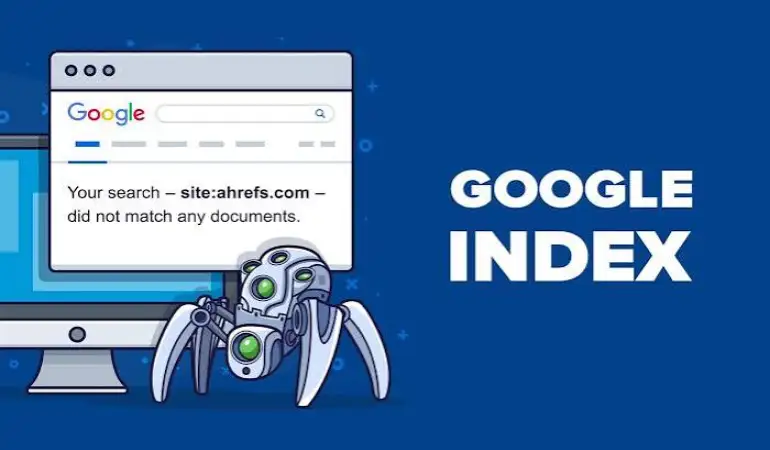
Publishing a page is not the same as getting found. Before anyone can discover your website in search, Google has to crawl it and add it to its index. For a brand new site with no history, that can take days or even weeks if you simply wait. The good news is that you can remove most of the friction and speed things up a lot. This guide walks through exactly how to get your pages indexed faster in 2026, using free tools and honest methods, and it also covers the newer question of how AI systems find your site.
First, understand what indexing actually is
Search engines work in two broad steps. Crawling is when a bot such as Googlebot visits your page and reads it. Indexing is when the page is stored in the search engine's giant library so it can be shown in results. A page that is crawled but not indexed will not appear in search, and a page that is never crawled cannot be indexed at all. Speeding up indexing means making it as easy as possible for the crawler to find your page, read it without obstacles, and decide it is worth storing.
One honest note up front: you cannot force Google to index a page, and indexing is never guaranteed. What you can do is remove the barriers and send clear signals, which makes fast indexing far more likely.
Set up Google Search Console on day one
Google Search Console is a free tool and the single most useful thing you can set up for a new site. Verify ownership of your domain first, because almost every other method depends on it. Once verified, you get access to the URL Inspection tool, which lets you paste any page from your site and see exactly how Google views it. If the page is not yet indexed, you will see a Request Indexing option that pushes your URL toward the front of the crawl queue, often triggering a crawl within hours instead of days.
The inspection tool does double duty. Before you request indexing, it tells you whether the page is even eligible, flagging problems like a noindex tag, a robots.txt block, or a server error. Fixing those first means you are not asking Google to crawl a page it could never index anyway.
Publish and submit an XML sitemap
An XML sitemap is a simple file that lists the pages you want search engines to know about. It acts like a map handed to the crawler so it does not have to stumble onto your pages by luck. Keep it clean by including only real, canonical pages you actually want indexed, and leave out duplicates, thank-you pages, and internal search results. Each entry can carry a last-modified date, which helps crawlers see what is fresh and worth fetching again. Once your sitemap is ready, submit it in Search Console so Google knows where to look.
Use internal links so crawlers can find new pages
This step is quietly one of the most powerful, and it is often skipped. Crawlers discover new pages by following links from pages they already know. A brand new page with no links pointing to it is nearly invisible, no matter how many tools you use. The practical habit is simple: within a day of publishing a new page, add two or three links to it from existing pages on your site that already get crawled. The more often a linking page is visited by Googlebot, the faster your new page tends to get discovered.
A useful pattern is to build a central hub page on a topic that links out to each related article, with each article linking back to the hub. This gives crawlers many clear paths to your new content and signals how your pages relate to one another.
Consider IndexNow for faster pinging
IndexNow is a protocol that lets your site instantly notify search engines the moment you publish or update a page, rather than waiting to be crawled. You generate a key, host a small verification file at your domain root, and then your site pings the IndexNow endpoint on every publish. Many content platforms offer a plugin that automates this. One honest caveat for 2026: IndexNow was created by Microsoft and is fully supported by Bing, while Google's support has stayed limited. It is still worth setting up, because it helps with Bing and other engines at almost no cost, but do not expect it to replace Search Console for Google.
Fix the technical basics that block crawling
Even a perfect sitemap will not help if a page has a barrier in front of it. Run through a short checklist before you publish. Make sure your robots.txt file is not accidentally blocking pages you want indexed. Confirm there are no stray noindex tags on important pages. Check that the page loads quickly, since a slow server wastes the limited attention a crawler gives a new site. Avoid long chains of redirects, keep your URLs simple and readable, and make sure each important page has one clear canonical version rather than many near-duplicates competing with each other.
The 2026 part: help AI systems find you too
In 2026, being indexed by Google is only half the picture. A large and growing share of people now get their first answer from AI tools such as ChatGPT, Perplexity, Gemini, and Google's AI features, and those tools rely on their own crawlers, with names like GPTBot, PerplexityBot, ClaudeBot, and OAI-SearchBot. Your robots.txt file is where you decide which of these AI crawlers are allowed to read your content. If you want to be quotable in AI answers, make sure you are not blocking the crawlers that feed them.
You may also hear about a file called llms.txt, promoted as a way to guide AI crawlers. Here is the honest 2026 position: Google has stated on the record that it does not use llms.txt for search or its AI features, and the major AI answer crawlers show very little traffic to these files, so it will not boost your rankings or citations today. It is cheap to add and harmless, and it is genuinely useful if your audience uses AI coding or agent tools, but do not treat it as a shortcut to visibility. Far more important is that your normal pages are crawlable, clearly written, and give a direct answer near the top, because that is what actually gets a site cited.
How long should indexing take
There is no fixed timeline, and it depends heavily on your site's age and authority. Established sites that are crawled often can see new pages indexed within hours. A brand new site with little history may take days or a couple of weeks, even after you do everything right. Requesting indexing in Search Console, keeping a clean sitemap, and adding internal links all shorten that window. The key mindset is patience plus good signals: you are making indexing faster and more likely, not flipping a switch.
Frequently asked questions
Why is my new website not showing up on Google at all?
Usually it is one of a few things: the site is brand new and has not been crawled yet, it has no internal or external links pointing to it, or a technical setting like a noindex tag or a robots.txt rule is blocking it. Set up Search Console and use the URL Inspection tool to see exactly which of these applies.
Can I pay to get indexed faster?
You cannot pay Google to index a page, and any service promising guaranteed instant indexing should be treated with caution. The legitimate speed-ups, such as Search Console, sitemaps, internal links, and IndexNow, are free or nearly free. Paid tools mainly automate these same steps for people publishing at large scale.
Do backlinks help with indexing?
Yes. A link from another site that already gets crawled gives Googlebot a path to discover your page. This is one reason a relevant directory listing or a mention from a related site can help a brand new page get found, on top of the internal links you add yourself.
Should I resubmit a page every day to speed it up?
No. Requesting indexing once after publishing, or after a meaningful update, is enough. Repeatedly submitting the same unchanged page does not help and just wastes your time. Focus that energy on internal links and content quality instead.
Key takeaways
Getting indexed faster is about removing friction between your content and the crawler, not about tricks. Set up Google Search Console on day one and use URL Inspection to request indexing and spot blockers. Publish a clean XML sitemap, add internal links to every new page within a day, and fix technical basics like robots.txt, noindex tags, and slow loading. Consider IndexNow for Bing and other engines, and in 2026 make sure your robots.txt allows the AI crawlers you want to be quoted by, while treating llms.txt as optional rather than a magic fix. Do these consistently and your pages will move from published to found in the shortest time your site's authority allows.